
Beyond Sin
Awakening to the Divine Nature in Everyone

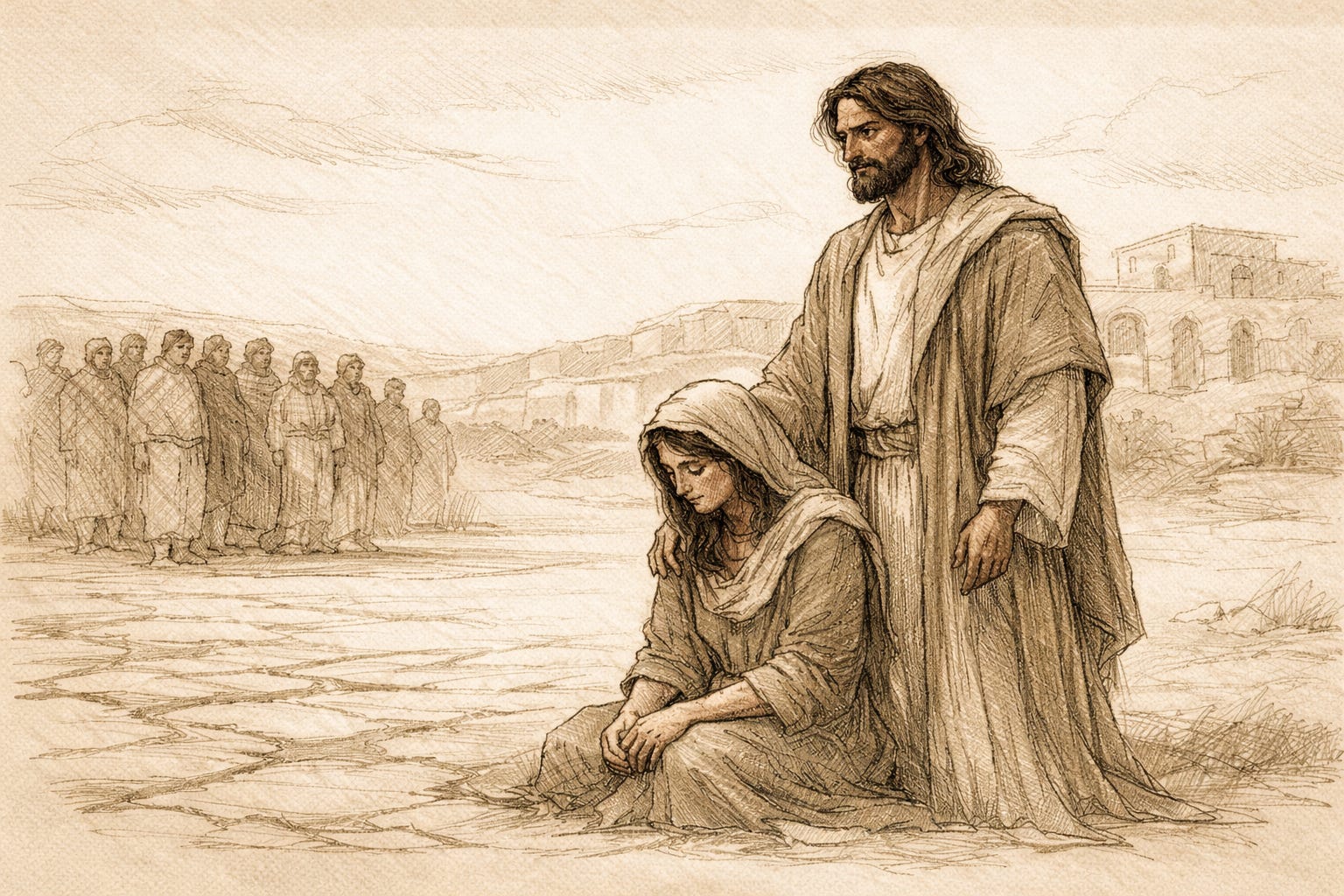
‘‘Jesus did not deny harm. He denied the false authority of condemnation from the standpoint of separation.’’
The language of sin has shaped human consciousness for centuries. It has been used to explain suffering, regulate behavior, enforce conformity, and divide the worthy from the unworthy. In many religious settings, sin becomes the great wound at the center of the self, a condition so deep that human beings must spend their lives trying to overcome it, compensate for it, or be forgiven for it.
That framework has immense emotional power. It can produce humility, but it can also produce shame. It can awaken conscience, but it can also keep people trapped in fear of themselves.
A New Thought approach invites a different starting place. It does not begin with corruption. It begins with divinity.
It begins with the radical spiritual claim that God is the only Life, the only Presence, the only real Power, and that every individual exists within that one sacred reality. If this is true, then the deepest truth about us cannot be sin. It must be spiritual wholeness. It must be the divine nature expressing itself through human life, however dimly that expression may sometimes appear.
This does not mean human beings never act in destructive ways. Clearly, we do. We lie, exploit, betray, injure, dominate, and abandon. We build systems that reward greed and normalize cruelty. We create personal and collective suffering on a staggering scale.
A spiritual teaching that ignores this would be dishonest.
But the question is not whether harmful conduct exists. The question is what it means. Does wrongdoing reveal the truth of who we are, or does it reveal the tragedy of who we have forgotten ourselves to be?
Sin as mistaken identity
From a New Thought perspective, what has often been called sin is better understood as a state of mistaken identity. It is the outpicturing of consciousness that has lost awareness of its unity with God and with all life.
It is not an independent force. It is not a stain on the soul. It is not the essence of a person. It is the result of believing in separation where no separation actually exists.
This distinction matters.
If sin is our essence, then condemnation begins to seem reasonable. If brokenness is our true condition, then fear becomes spiritualized. But if our true nature is divine, then even our worst actions must be understood differently.
They still require accountability. They still have consequences. They still wound others and distort lives. But they do not define the eternal identity of the one who commits them.
This is not moral softness. It is spiritual depth.
The illusion beneath harm
The belief in separation is the real source of human error. When a person believes they are separate from God, they begin to live from fear rather than trust. When they believe they are separate from others, they begin to justify selfishness, domination, and indifference.
When they believe life is fragmented into competing selves, they can imagine that another’s pain is not their own concern, that another’s loss may be their gain, that violence can secure peace, or that exploitation can coexist with innocence.
Every form of lovelessness grows from this illusion.
What we call sin, then, is not proof that divine life is absent. It is proof that divine life is being ignored, resisted, or obscured. The sun does not cease to shine because clouds appear. In the same way, the divine within us does not disappear because consciousness becomes confused.
The spiritual problem is not that God has abandoned us. It is that we have learned to identify with a false self, a frightened self, a defended self, a self organized around scarcity, shame, and division.
This false self is persuasive because it seems practical. It tells us to protect ourselves at all costs, compare constantly, judge quickly, and seek control. It teaches us to define people by their failures, including our own.
It is the voice of accusation, the inner and outer system that says a person is reducible to their worst act.
Under its influence, we do not merely recognize harm. We enthrone it. We do not seek healing. We seek categories: innocent and guilty, pure and impure, saved and damned.
But spiritual consciousness sees more deeply than categories.
‘‘Sin is not the deepest truth of anyone. Divine being is deeper than human error.’’
What Jesus was teaching
This is what Jesus was teaching when he said, “He who is without sin among you, let him throw a stone at her first.”
He was not simply making a clever point about hypocrisy, nor was he saying that harmful behavior does not matter. He was exposing the illusion of separation beneath the act of condemnation itself.
The crowd saw a sinner standing apart from themselves, a woman they could isolate, judge, and cast out. Jesus dissolved that false division in a single sentence. He revealed that no one stands outside divine reality in a position to condemn another as spiritually fallen or separate from God.
The accusers were not pure beings confronting impurity. They too were participating in the same human illusion, the same blindness that forgets the divine nature in everyone.
In refusing to cast a stone, Jesus refused to reduce the woman to her worst moment, and he refused to let the crowd imagine that judgment was the same thing as truth.
In that moment, he was teaching that sin is not the deepest truth of anyone, that condemnation is a form of spiritual blindness, and that divine sight begins where accusation ends.
Beyond condemnation
To awaken beyond sin is not to deny that error exists. It is to deny that error is ultimate.
It is to refuse the lazy temptation of condemnation and instead ask what false belief has produced this suffering. What fear is operating here? What wound? What ignorance? What spiritual amnesia?
This is not an excuse for harm. It is the only path toward transformation.
Condemnation hardens identity. Spiritual insight loosens it. Shame tells people they are darkness. Truth reveals that darkness is what happens when light is hidden.
This perspective changes how we see ourselves. Many people carry private narratives of failure that become almost theological in force. They do not merely regret what they have done. They conclude that they are fundamentally unworthy. They interpret mistakes as evidence against their own sacredness.
Over time, guilt becomes identity. Shame becomes spirituality. The person no longer believes they are a divine being, learning, growing, and awakening. They believe they are a flaw that occasionally behaves well.
Nothing in authentic spiritual truth requires that conclusion.
The soul is not stained
To say that our nature is divine is not to flatter the ego. It is to restore proportion. It is to understand that whatever is false in us is not deepest in us.
The divine image may be obscured, but it cannot be destroyed.
The soul is not stained by experience in the way theology has often imagined. The soul remains rooted in God, always. What must change is not our worth, but our awareness.
We do not become holy by finally earning it. We awaken to the holiness that has always been present beneath confusion and fear.
This changes how we see others as well. When we view people through the lens of sin, we are tempted to reduce them to moral snapshots. We freeze them inside a moment, a label, a history, or a social role.
But when we view them through the lens of divine nature, we are called to hold a larger truth. We can name harm without surrendering to hatred. We can seek justice without losing sight of sacred identity. We can protect the vulnerable without accepting the lie that anyone is spiritually disposable.
This is not permissiveness
That last point is essential.
A teaching that there is no sin in the ultimate sense does not mean that nothing matters. It does not mean abuse should be tolerated, exploitation forgiven cheaply, or injustice ignored in the name of spiritual niceness.
In fact, the opposite is true.
When we understand every person as a bearer of divine life, harm becomes more serious, not less. To injure another is not merely to break a rule. It is to violate the visible expression of the sacred. To participate in systems of cruelty is to act from the illusion that some lives are worth less than others, which is precisely the lie spiritual awakening must undo.
So accountability remains essential. But accountability is not damnation. It is not the ritual humiliation of the self. It is the courageous willingness to see clearly, repair what can be repaired, and allow consciousness to be transformed.
Real responsibility says: I will not hide from what I have done, but neither will I make it my identity. I will learn. I will restore. I will awaken.
This is a harder path than shame because shame is passive. Awakening requires participation.
The collective form of separation
A society built on this vision would look very different. It would not organize itself around punishment first and healing second. It would not treat poverty, addiction, violence, or alienation as evidence of inferior souls.
It would recognize that collective harm also arises from collective separation.
Racism is separation codified. Economic exploitation is separation monetized. War is separation weaponized. Ecological destruction is separation industrialized. All of them rest on the same hallucination, that life is fragmented and that one part can injure another without injuring the whole.
The task, then, is not only personal salvation but collective remembrance. We need forms of culture, politics, economics, and community that reflect the truth of shared being.
We need a moral vocabulary rooted less in condemnation and more in restoration. We need spiritual language that heals shame without dissolving responsibility.
Most of all, we need to recover the audacious idea that every person, beneath every wound and distortion, is still an expression of God.
Awakening is the cure
Beyond sin lies not permissiveness, but vision. Not moral collapse, but spiritual maturity. Not indifference to wrongdoing, but a deeper understanding of its cause and its cure.
The cure is awakening.
Awakening to the truth that no one is outside divine Life. Awakening to the fact that separation has never been more than a painful belief. Awakening to the sacred center in ourselves that no failure can erase and no condemnation can improve.
Awakening to the divine nature in everyone, not as sentiment, but as metaphysical fact.
When that awakening deepens, judgment softens, compassion strengthens, responsibility clarifies, and love becomes more than a virtue. It becomes realism.
We begin to live as if God is truly all, and as if every being matters because every being is rooted in the same holy ground.
Then sin loses its authority, not because we have become careless, but because we have become clear.
What remains is truth. What remains is wholeness. What remains is the unbroken life of God, waiting to be recognized in everyone.
Before you go, tap the ❤️ and re-stack this post to help New Thought, New World reach more readers ready to rethink what’s possible.
I know some may not want to commit to a paid subscription, but if you’d like to support my work, you can always buy me a coffee on Ko-fi. Your contribution helps sustain independent writing rooted in consciousness, compassion, and social renewal. Every bit of support truly makes a difference.
Beautiful